Service Businesses Are Automating the Work Nobody Wants to Do
A practical look at the monitored workflow automations service businesses are adopting first, from lead response to owner visibility.
Service businesses are not becoming software companies.
They are automating the small, repetitive handoffs that make customers wait, office teams chase details, and owners discover problems too late.
The short answer
Service businesses are adopting monitored automation first in the work nobody wants to manually chase: missed calls, form follow-up, estimate reminders, dispatch notes, invoice handoffs, customer replies, and owner visibility. The safest path is not to automate judgment. It is to make routine capture, routing, reminders, and exception visibility more reliable while people keep control of pricing, scheduling, complaints, and approvals.
If you are not sure which handoff is leaking first, start with the Ops Scorecard. If the problem is already obvious, choose one Quick Immediate Win instead of trying to rebuild the whole operation.
What's actually being automated
Walk through a mid-sized HVAC, plumbing, roofing, electrical, cleaning, or home-service company and you are likely to find practical workflow automation in places like these:
| Workflow | What automation can handle | What should stay human |
|---|---|---|
| New leads | Capture missed calls, forms, messages, and after-hours inquiries into one visible queue | Deciding fit, pricing, urgency, and sensitive replies |
| Scheduling | Prepare job context, surface availability, and flag conflicts | Capacity calls, customer tradeoffs, and exceptions |
| Estimates | Track sent quotes, follow-up dates, stale deals, and owner review needs | Scope changes, discounts, and final terms |
| Job closeout | Request missing photos, materials, signatures, and notes | Field judgment, warranty, safety, and quality calls |
| Invoices | Route invoice-ready jobs and flag missing context | Approvals, disputes, and edge cases |
| Customer check-ins | Draft routine check-ins and route unhappy replies for review | Complaints, refunds, escalation, and relationship repair |
None of this needs to be glamorous. It needs to be visible, owned, and monitored.
Why this is happening now
Three things changed at the same time:
- The back office has more tools than process. Most service businesses already have phones, forms, field-service software, spreadsheets, calendars, inboxes, and payment tools. The leak is usually the handoff between them.
- Customers expect faster acknowledgement. A customer who submits a request after hours still wants to know the business saw it. That does not mean a robot should negotiate the job. It means the lead should not disappear.
- Owners need exception visibility. The useful question is not "how many things happened?" It is "which lead, estimate, job note, invoice, or reply is stuck right now?"
This is why the first useful automation is usually a monitored workflow, not a giant transformation project.
Where to start by situation
| If the dropped ball is... | Start here | Why |
|---|---|---|
| Calls, forms, or messages sit too long | Speed-To-Lead Engine | Captures inquiries, assigns ownership, and monitors stale response handoffs |
| Estimates go quiet after being sent | Estimate Follow-Up Engine | Keeps quoted work visible with follow-up dates and review points |
| The team needs one narrow fix | Quick Immediate Wins | Builds a focused, supervised workflow before expanding scope |
| The website is unclear to people or AI answer systems | Agent-Ready Website Optimization | Clarifies services, FAQs, next steps, and lead handoffs |
| Internal helpers are needed after workflow clarity exists | AI Agent Team Starter | Adds supervised helpers for capture, routing, summaries, and monitoring |
The goal is to pick the first visible leak, not to chase every possible automation at once.
Example: a Monday morning service business loop
A residential HVAC owner opens the day with five problems already forming:
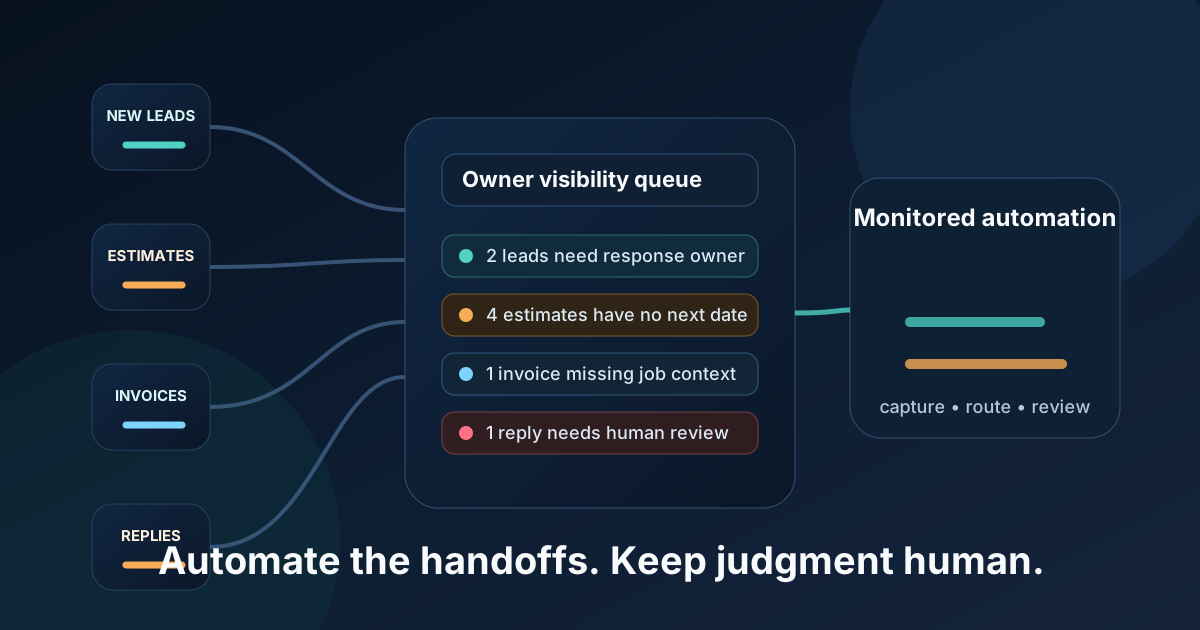
- Two weekend calls have no confirmed reply.
- Three forms came in after hours and are sitting in different inboxes.
- Four estimates from last week have no next follow-up date.
- A completed job is missing photos and materials before invoicing.
- One customer reply sounds unhappy and should not get an automatic response.
A monitored workflow does not replace the owner or office manager. It puts those exceptions in one operating view, shows who owns each next step, and keeps routine reminders moving until a person needs to review.
That is the difference between useful automation and disconnected software.
What this means for your business
The cost of staying manual is easier to see now.
Not because AI is coming for your business. Because competitors who clean up the boring handoffs respond faster, communicate better, and spend less time discovering missed promises after the customer is already frustrated.
Speed of response. Accuracy of communication. Follow-through on promises.
Those are the things monitored automation improves first. They are also the things customers remember.
The move is not "more AI." It is a system that gets reviewed.
Nobody expects a local service business to act like a technology company. Customers expect the business to show up, communicate clearly, and keep its promises.
The safest way to get there is to automate capture, routing, reminders, and visibility while humans keep judgment. Start with the Ops Scorecard, then use a narrow Quick Immediate Win or one of the focused engines when the first leak is already clear.
FAQ
What are service businesses automating first?
Service businesses usually automate lead capture, missed-call follow-up, estimate reminders, job-note collection, invoice handoffs, customer check-ins, and owner visibility before they automate more complex work.
Should service businesses automate customer conversations?
Routine acknowledgement and simple follow-up can be prepared with automation, but complaints, pricing, scheduling conflicts, scope changes, and emotional replies should stay human-reviewed.
What is monitored automation for a service business?
Monitored automation is a workflow that captures routine work, routes it to the right owner, flags exceptions, and shows whether the handoff happened. It does not hide judgment calls from the people responsible for them.
What is the safest first automation for a contractor or home-service company?
The safest first automation is usually one narrow handoff with clear ownership, such as missed-call response, form routing, estimate follow-up, or invoice-ready job review.
How should a business choose the first workflow to automate?
Choose the workflow with the clearest dropped ball: leads waiting too long, estimates going quiet, job notes missing, invoices delayed, or customer replies sitting without review. The Ops Scorecard helps identify that starting point.
Next step
Find the leak, then pick the monitored fix.
Not sure which workflow is leaking attention first? Start with the Scorecard, or continue into the offer most related to this field note.
For owners deciding where internal AI helpers should support the team first.